Objective
Help you choose the right AI dropshipping website builder and app stack for 2027, see the real monthly cost, and set the store up to rank on Google and AI search.
Key takeaways
- Shopify plus a sourcing app (DSers, Zendrop or AutoDS) is the best AI dropshipping stack for most stores in 2027.
- Wix is the best general builder alternative, with 31 dropshipping apps and AI-written SEO titles.
- AI store generators are free, but a store you can run costs about $59 to $90 a month.
- DSers leads app ratings at 5.0 stars; Spocket trails at 3.7 with billing complaints.
- Google does not penalise duplicate supplier descriptions; Merchant Center misrepresentation is the bigger risk.
- Under the FTC Mail Order Rule, the store, not the supplier, is liable for shipping delays.

Prices and ratings were checked on each vendor's own page and the Shopify App Store on November 18, 2026. No affiliate links or paid placements.
The best AI dropshipping website builder in 2027 is still Shopify, paired with a sourcing app such as DSers, Zendrop or AutoDS. Wix is the strongest alternative general builder, with 31 dropshipping apps and AI that writes product SEO titles. For a free start, use Shopify’s AI store generator with the free plan of DSers or Zendrop. Squarespace and BigCommerce work but have fewer supplier apps, and cheap AI builders such as Hostinger, 10Web, Durable and Kleap have no verified dropshipping integrations. Every price below was checked on the vendor’s own page on November 18, 2026.
Here is the catch most “free AI store” pages skip: the AI is free, the store is not. Once you add a store plan and a sourcing app, a store you can actually run costs about $59 to $90 a month before you buy a single product or ad. Almost every “AI dropshipping store in minutes” tool, including AutoDS, Spocket, Zendrop and DropMagic, simply generates a Shopify store for you.
I run SEO and paid growth for ecommerce brands, so this guide looks at builders the way Google, ChatGPT and your customers will: product feeds, shipping honesty, structured data and real cost. I have no affiliate links and no paid placements here.
Best AI dropshipping website builders at a glance
There are two kinds of tool, and people mix them up. A store builder hosts your site, takes payments and handles SEO. A dropshipping app finds products, syncs stock and sends orders to suppliers. You need one of each.
| Builder | Best for | AI features | Dropshipping apps | Entry price | Free plan or trial |
|---|---|---|---|---|---|
| Shopify | Best overall | Sidekick assistant, AI store and theme generator | Largest catalogue (DSers, CJ, Printful, Printify and more) | $29/mo yearly, $39 monthly | 3 days free, then $1/mo for 3 months |
| Wix | Best general builder | AI site chat, AI product descriptions, AI SEO titles | 31 apps incl. Zendrop, DSers, AutoDS, Spocket | Core $29.77/mo yearly | Free plan, but it cannot take payments |
| Squarespace | Design-led small catalogues | Blueprint AI, Product Composer, SEO Scanner | Spocket, Syncee, Printify, Printful | $19/mo yearly (2% fee) | 14-day trial, no card |
| BigCommerce | Growing multi-channel stores | Companion AI assistant, MCP Toolkit | DSers, Spocket, Syncee, Printful, Doba | $29/mo yearly, $39 monthly | 15-day trial, no card |
| WooCommerce | WordPress owners | Through plugins only | Through plugins | Free plugin plus hosting | Free software |
| Hostinger | Cheapest website, not dropshipping | AI builder credits, AI product from image | None verified | $2.79/mo on a 48-month prepay | 30-day money-back |
| 10Web, Durable, Kleap | Simple AI sites | AI site and blog generation | None verified | $9 to $25/mo | Free tiers (10Web takes a 7% fee) |

The 7 best AI dropshipping store builders, reviewed
1. Shopify: best AI dropshipping website builder overall
Shopify wins on ecosystem, not on uniquely clever AI. Its dropshipping app category is led by DSers (5.0 stars from more than 6,400 reviews) and CJdropshipping (4.9 from about 2,950), and every major sourcing tool builds for Shopify first (Shopify App Store).
- AI features: Sidekick writes store, product, blog and email copy, edits images from a prompt and generates theme blocks. It is included on every plan (Shopify Help). A free AI theme generator builds a starting store from a business description.
- Price: Basic $29 a month billed yearly or $39 monthly. Third-party payment providers add a 2% fee.
- Free option: 3 days free, then $1 a month for the first 3 months.
- AI search edge: OpenAI says Shopify Catalog product data is already in ChatGPT with “no additional work” from merchants (OpenAI). Shopify also offers a $0 Agentic plan for selling only through AI channels.
- Watch out for: app costs stack up fast. Budget for a sourcing app, a reviews app and an email tool.
2. Wix: best general website builder for dropshipping
Wix is the most complete non-Shopify option. Its App Market lists 31 dropshipping apps, including Zendrop, DSers, AutoDS, Spocket, Syncee, Modalyst and Sell The Trend.
- AI features: a chat-based AI site builder, up to 3 AI product descriptions per product, Photo Studio and AI-written SEO titles and meta descriptions (Wix Help).
- Price: Core shows $29.77 a month billed yearly, which looks like a promotional rate.
- Free option: a free plan exists, but the free and Light plans cannot accept payments, so Core is your real starting point.
- Watch out for: AI SEO suggestions only unlock after you upgrade, and the free plan uses a Wix subdomain.
3. Squarespace: best for design-first stores with a small catalogue
- AI features: Blueprint AI site builder, AI Product Composer (description, suggested price and SEO copy), Image Studio and an SEO Scanner (Squarespace).
- Dropshipping: Spocket, Syncee, Printify and Printful extensions.
- Price: Basic $19 a month billed yearly with a 2% transaction fee. Core at $29 removes the fee.
- Watch out for: AI credits are capped. Basic gets 10 one-time credits and Core 20 a month, which runs out fast if you rewrite hundreds of supplier listings.
4. BigCommerce: best for multi-channel stores that will scale
- AI features: Companion AI assistant, “Agentic Commerce” tools and an MCP Toolkit for AI agents.
- Dropshipping: DSers, Spocket, Syncee, Printful, Doba, Inventory Source and AliExpress connectors.
- Price: Core $29 a month yearly, $39 monthly, the same headline price as Shopify. 15-day trial, no card needed.
- Watch out for: plans auto-upgrade once trailing 12-month sales pass $30,000 on Core or $100,000 on Growth (BigCommerce).
5. WooCommerce: best for people already on WordPress
The plugin is free and you own everything. The trade-off is that AI and dropshipping both come from third-party plugins, hosting runs about $25 to $350 a month on WooCommerce’s own listed partners, and you maintain the stack yourself (WooCommerce).
6. Hostinger: cheapest AI builder, weak for dropshipping
Hostinger’s AI builder can create a product from a photo on its Unlimited plan and above. The $2.79 headline price needs a 48-month prepayment and renews at $16.99, and I found no verified dropshipping integration. Fine for a simple brand site, not for a sourcing-driven store.
7. 10Web, Durable and Kleap: AI site builders, not store engines
All three generate a site from a prompt quickly and cheaply: Kleap from $9, 10Web from $10 and Durable from $25 a month. None lists a verified dropshipping integration, and Durable’s own pricing page says it is “not designed specifically” for ecommerce. 10Web’s free plan also takes a 7% transaction fee. Use them for a landing page or a test, not for a real dropshipping catalogue.
Best AI dropshipping apps to pair with your builder
The “AI store in minutes” tools are mostly sign-up funnels. Each gives you a free Shopify store with about 10 products loaded, then earns money from its paid sourcing plan (AutoDS). Choose the app for its suppliers and shipping, not its store generator.
| App | Best for | AI store builder | Monthly price | Free plan | Shopify rating |
|---|---|---|---|---|---|
| DSers | Free AliExpress automation | No | Free, $19.90, $49.90 | Yes (3 stores, 3,000 products) | 5.0 (6,438 reviews) |
| AutoDS | All-in-one automation | Yes, free AI Shopify store | $26.90, $39.90, $66.90 | No, 3-day trial | 4.6 (1,382) |
| Zendrop | US warehouses and AI ad creatives | StoreBuild.ai, free | Free, $49, $79 | Yes, but auto-fulfilment is paid | 4.5 (1,300) |
| Spocket | US and EU suppliers | Storebuilder.ai | $39.99 to $99.99 | Yes | 3.7 (623) |
| Sell The Trend | Product research plus own store | SellShop, AI Brand Builder | From $49.97 | No, 14-day trial | Not listed |
| CJdropshipping | No-subscription sourcing | No | Pay per order | Free to use | 4.9 (about 2,950) |
| DropMagic | Store from one product link | Yes, full Shopify store | Pro price not published | Free to build, Pro to publish | Not listed |
Ratings tell a story. Spocket’s recent reviews mention unexpected charges and trouble cancelling, while DSers holds a perfect score from thousands of merchants. Branding features are rarely free: Spocket’s branded invoices start on its $59.99 plan, and DSers’ branded tracking page needs Advanced.
Is there a truly free AI dropshipping website builder?
You can generate a store for free. You cannot run one for free. Wix’s free plan cannot take payments, Shopify’s free period lasts 3 days, and free AI tiers use a vendor subdomain that looks untrustworthy to shoppers. Here is what a real monthly stack costs:
| Stack | Approximate monthly cost | Shipping origin |
|---|---|---|
| Shopify Basic + DSers Free + CJ per order | $29 to $39 | Mostly China |
| Shopify Basic + AutoDS | About $59 | Mixed |
| Shopify Basic + Zendrop | About $68 to $88 | US and China |
| Shopify Basic + Spocket | About $79 | US and EU |
The stack totals come from AutoDS’s own comparison, so treat them as a vendor estimate (AutoDS blog). Prices also change by channel: AutoDS and Zendrop charge differently on the Shopify App Store than on their own sites. Always check where a price comes from before you commit.
Dropshipping in 2027: what the data actually says
The market is large, but the estimates disagree. Grand View Research values global dropshipping at $464.4 billion in 2025, growing at 20.7% a year to 2033 (Grand View Research). Global Market Insights is more cautious at $379 billion in 2025, reaching $936 billion by 2035 (Global Market Insights). Both count big retailers that use drop-ship fulfilment, so the size says little about a single small store’s chances.
You will see “90% of dropshipping stores fail” everywhere. No published dataset supports it. The best real benchmark is US Bureau of Labor Statistics data for all new businesses: about 20% close in year one and about half within five years (DropCommerce summary). Dropshipping has low barriers, so its survival rate is probably lower, but any exact failure figure is a guess.
The real reasons dropshipping stores fail (and what AI cannot fix)
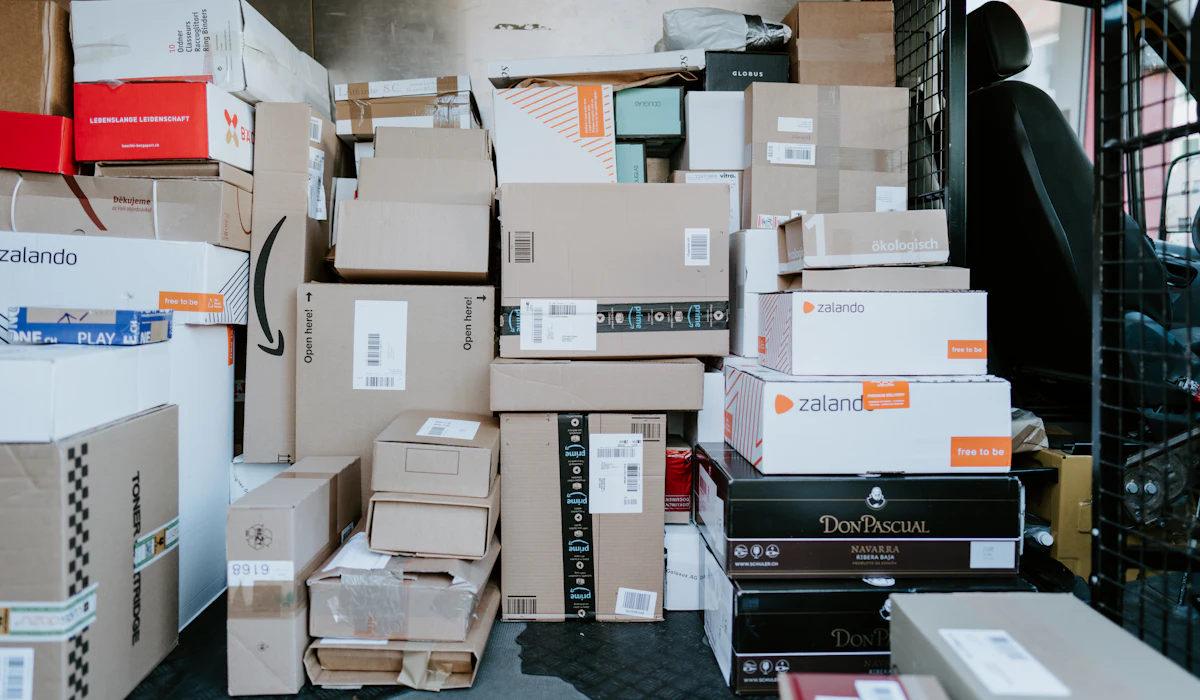
An AI builder gives you a themed store, about 10 products and generated copy. It does not solve the problems that decide whether you make money:
- Slow, unclear shipping. CJ advertises 7 to 15 days from China, while one competing fulfilment firm reports 8 to 17 days in practice for CJ Packet (DailyFulfill). Late parcels mean refunds, chargebacks and bad reviews.
- Identical stores. Hundreds of stores sell the same AliExpress product with the same photos and copy. Nothing makes yours the one people trust.
- Supplier reliability. Stock-outs and quality issues land on you, not the supplier.
- Paid ads that don’t convert. No AI builder tests ads or landing pages for you. That is still the hardest and most expensive part.
- Policy and legal risk. Google Merchant Center suspensions and FTC rules hit dropshippers hardest, as covered below.
How to rank a dropshipping store on Google and AI search in 2027
This is where most builder reviews stop and where most stores lose. These are the rules that matter, taken from Google’s and the FTC’s own documentation.
Duplicate supplier descriptions are not a penalty
Google says that with duplicate content it simply “chooses the canonical URL” to show, and does not describe this as a penalty (Google Search Central). Google’s John Mueller has called reusing manufacturer descriptions “perfectly fine”, with the catch that only one matching page tends to rank (Search Engine Journal). So rewrite your top sellers to stand out, using your own photos, measurements and comparisons, not to avoid a penalty.
Merchant Center’s Misrepresentation policy is the real risk
Google bans “intentionally hiding the actual location from which your products are shipped”, burying long handling times in small print, and starting international return windows on the order date instead of the delivery date. Serious cases can be suspended without warning (Merchant Center). Google also asks you to set handling and transit times separately in business days (handling time). A two-week delivery from China is allowed if you state it clearly. Hiding it is what gets you suspended. If this has already happened to you, my Google Shopping ads work covers feed and Merchant Center fixes.
Use the right product structured data
Google recommends sending both a Merchant Center feed and on-page Product markup (Google merchant listing docs). For a dropshipping store, that means:
- Use
Offer, notAggregateOffer, because “the merchant has to be the seller”. - Add
shippingDetailswith separate handling and transit times. - Add a store-wide
hasMerchantReturnPolicy. - Keep prices, stock and shipping identical across the page, the markup and the feed.
Follow the FTC rules on shipping and reviews
In the US, the FTC’s Mail Order Rule makes the store responsible for its drop-shipper’s delays. Asked who is liable, the FTC’s guide answers: “The seller is.” You need a reasonable basis for any shipping time you show, must offer a cancel-or-wait choice when orders run late, and must refund cancellations within 7 working days (FTC guide). The FTC’s 2024 rule also bans fake reviews, including AI-generated ones, with civil penalties (FTC). Importing AliExpress reviews as if they were your store’s reviews is risky under that rule. This is my reading, not legal advice.
Get found in ChatGPT, Google AI Mode and Gemini
Google says “there are no additional requirements” to appear in AI Overviews or AI Mode (Google Search Central). AI Mode shopping draws on Google’s Shopping Graph of more than 50 billion listings. In May 2026 Google added Merchant Center conversational attributes, AI performance insights and a Universal Cart across Search and Gemini (Google). On ChatGPT, Shopify stores are included automatically, while other platforms need an Agentic Commerce Protocol feed.
In practice, AI search visibility for a store comes down to clean, complete, honest product data. I cover the full process on my AI shopping search visibility page, and how AI agents check out on your store on the agentic commerce optimization page.
How to choose the right builder: a quick checklist
- Starting with no budget? Shopify’s $1 offer plus DSers Free and CJ. Expect slower China shipping.
- Want fast US delivery? Shopify plus Zendrop or Spocket, and show honest delivery times on every product page.
- Already love Wix? Wix Core plus Zendrop, DSers or AutoDS works well.
- Selling on Amazon, eBay and TikTok Shop too? AutoDS or BigCommerce for multi-channel sync.
- On WordPress already? WooCommerce, if you are happy to manage plugins and hosting.
- Just testing an idea? A free AI generator is fine, but do not run ads to a store on a vendor subdomain.
My advice before you build
Pick your supplier before your builder. Delivery speed, product quality and return handling decide your reviews, your Merchant Center standing and your ad costs far more than which AI wrote your homepage. Treat every AI-written product page as a draft, add your own photos and real measurements, and publish delivery times you can actually meet.
Then spend your first marketing budget where data says buyers are: Google Shopping, retargeting and email, not just cold social ads. If you want help with that side, you can work with a digital marketing expert who has run ecommerce SEO and paid search for brands in more than 20 countries.
How I picked these builders
I compared each platform’s own pricing page, help documentation and app marketplace on November 18, 2026, from a US connection. Ratings come from the Shopify App Store on the same date. I left out tools with no live pricing page and anything I could only confirm from affiliate reviews. Nobody paid to be included, and there are no affiliate links in this article. Prices change often, so check the vendor’s page before you buy.
Want a second opinion on your store’s SEO, feed or ads? Request a free audit and I will tell you what to fix first.
- Review of your Google and AI search visibility
- The pages to fix first, in priority order
- A clear 90 day plan, with no obligation
FAQs
What is the best AI dropshipping website builder in 2027?
Shopify is the best overall choice, paired with a sourcing app such as DSers, Zendrop or AutoDS. It has the largest dropshipping app ecosystem, the Sidekick AI assistant on every plan, and its product data is included in ChatGPT automatically. Wix is the strongest alternative.
Is there a free AI dropshipping website builder?
You can generate a store free with Shopify's AI generator, AutoDS, Zendrop StoreBuild.ai or Spocket Storebuilder.ai, but you cannot run one free. Shopify costs $1 a month for 3 months after a 3-day trial, and the Wix free plan cannot accept payments.
How much does it cost to run a dropshipping store?
A working store costs about $59 to $90 a month for the store plan and a sourcing app, before products and ads. The cheapest route is Shopify Basic at $29 to $39 a month with the free DSers plan and CJdropshipping's pay-per-order model.
Which dropshipping app works best with Shopify?
DSers has the highest rating at 5.0 stars from more than 6,400 reviews and a free plan. AutoDS suits all-in-one automation from $26.90 a month, Zendrop suits US warehouses, and CJdropshipping suits sourcing without a subscription.
Can I dropship with Wix or Squarespace?
Yes. Wix lists 31 dropshipping apps including Zendrop, DSers, AutoDS and Spocket, and you need at least the Core plan to take payments. Squarespace supports Spocket, Syncee, Printify and Printful, but its AI credits are capped on lower plans.
Does Google penalise duplicate supplier product descriptions?
No. Google picks one canonical page to show and does not treat duplicate product descriptions as a penalty. Rewriting helps you stand out from other stores selling the same product, but the bigger risk is Merchant Center's Misrepresentation policy.
Why do Google Merchant Center accounts of dropshipping stores get suspended?
Usually for misrepresentation: hiding where products ship from, burying long handling times, unclear return policies or prices that do not match the page. State real handling and transit times and keep the feed identical to the product page.
How do I get my dropshipping store found in ChatGPT and Google AI Mode?
Keep complete, accurate product data in Merchant Center and on-page Product schema with Offer, shippingDetails and a return policy. Shopify stores are included in ChatGPT automatically; other platforms need an Agentic Commerce Protocol feed.