Objective
Learn exactly where AI helps in marketing, where it fails, and how to start using it safely, with every claim backed by 2025 and 2026 data.
Key takeaways
- 86.4% of marketing teams use AI, but only 14% are scaling it (HubSpot 2026; Marketing AI Institute 2025).
- Give AI the repetitive work: research, drafts, bidding, predictions and admin. Keep people in charge of judgement.
- Google does not penalize AI-assisted content; it penalizes mass-produced pages that add no value.
- Treat platform uplift claims as vendor data and test AI campaigns against a control group.
- Predictive email and analytics tools need enough clean data before they work.
- Set a usage policy and train your team first: 55% of marketing teams still have no AI policy.

I have used every type of tool in this guide, and the lesson is always the same. AI is brilliant at the first 70% of a task and risky in the last 30%. This guide shows where to draw that line for each part of your marketing.
To use AI in marketing well, give it the repetitive work and keep people in charge of judgement. Let AI handle research, first drafts, ad bidding, predictions and admin. Keep humans responsible for strategy, original insight, fact-checking and anything that touches your brand or the law. That split is what the data from 2025 and 2026 supports.
Almost everyone has started. HubSpot’s 2026 State of Marketing found that 86.4% of marketing teams use AI in at least a few areas. But only 14% of teams are scaling it, according to the Marketing AI Institute’s 2025 report. Most businesses are using AI. Few are getting real results from it.
This guide closes that gap. It covers eight practical ways to use AI in digital marketing, a seven-step plan to get started, and the rules you must follow in 2026. Every number is linked to its source.
What does it mean to use AI in marketing?
Using AI in marketing means using machine learning and generative AI tools to plan, create, target, personalize and measure marketing faster or better than people could alone. Generative AI creates new text, images and video. Predictive AI scores and forecasts, for example which customer is likely to buy or leave. Most marketing teams now use both.
| Marketing job | What AI does well | What people must still do |
|---|---|---|
| Content | Research, outlines, first drafts, repurposing | Original experience, data, fact-checking, final edit |
| SEO and AI search | Keyword grouping, content briefs, technical checks | Strategy, expert answers, earning mentions |
| Paid ads | Bidding, targeting, ad variations | Budgets, controls, brand rules, testing |
| Email and CRM | Segments, predictions, send timing | Offer, message, data quality |
| Analytics | Pattern spotting, forecasts, mix modelling | Asking the right questions, deciding |
| Customer service | Routine questions, 24/7 replies | Complex cases, a visible route to a human |
AI in marketing: the numbers that matter in 2026
Before you change your workflow, it helps to know where other marketers really are. Here is the most reliable recent data I could find.
| Finding | Number | Source |
|---|---|---|
| Organizations using AI in at least one business function | 88% | McKinsey, 2025 |
| Marketing teams using AI in at least a few areas | 86.4% | HubSpot, 2026 |
| Marketing teams scaling AI (not just piloting) | 14% | Marketing AI Institute, 2025 |
| Marketers using AI extensively for content creation | 42.5% | HubSpot, 2026 |
| Marketers who say AI is reshaping their SEO | 85% | Salesforce, 2026 |
| Marketers who report a significant productivity gain | 26.5% | HubSpot, 2026 |
| Organizations that see any profit (EBIT) impact from AI | 39% | McKinsey, 2025 |
| Marketers with no AI training from their employer | 68% | Marketing AI Institute via MarTech |
The pattern is clear. AI saves time: about two in three teams save 10 or more hours a week, according to HubSpot. But time saved does not turn into profit by itself. The teams that win decide in advance what to do with those hours.
The best controlled evidence comes from outside marketing, and it carries a warning. In a Harvard and BCG study of 758 consultants, people using AI finished 12.2% more tasks, 25.1% faster, with over 40% higher quality on tasks AI handles well. On a task outside AI’s abilities, they were 19 percentage points less likely to get the right answer. AI makes good work faster, and it makes wrong work look convincing.
How to use AI in marketing: 8 practical ways
Here is how I would use AI channel by channel, with what to do in each one. I have kept vendor claims labelled as vendor claims, because platforms grade their own homework.
1. Content marketing: let AI draft, then add what only you know

How to use generative AI in content marketing: use it for topic research, briefs, outlines, first drafts and repurposing one piece into many formats. Then add your own experience, data, examples and opinion, and fact-check every claim.
Google does not penalize content because AI helped write it. Its guidance on generative AI content supports using AI to research topics and structure original content. What Google targets is scaled content abuse: generating many pages “without adding value for users”. Google also asks you to fact-check titles, meta descriptions, structured data and alt text, because AI can make things up.
Marketers feel this pressure too. HubSpot found 62.7% say they need more unique, human-centered content to compete with AI-generated content.
What to do: Write a short brief yourself first: audience, angle, your proof and your opinion. Ask AI for the outline and draft. Then rewrite the intro, add one real example or data point per section, and check every number against its source.
2. SEO and AI search: good SEO is still the answer
Many agencies now sell “GEO” (generative engine optimization) as a separate service. Google’s own documentation is plain: “There are no additional requirements to appear in AI Overviews or AI Mode.” You do not need special AI files or new schema. Pages need to be indexed, crawlable, well linked and clearly written, with structured data that matches the page (Google Search Central).
What is changing is how people search. In its Q3 2026 results, Google said AI Mode queries are about three times as long as traditional searches. Longer questions reward pages that answer specific questions in depth.
What to do: Use AI to group keywords and draft briefs. Write question-based headings with a short, direct answer under each. Then track whether AI tools mention your brand (my AI search visibility consulting does this every month), as I explain in my AI visibility report and my guide to AI Overviews.
3. Paid ads: let AI bid, but keep the controls and test
Google and Meta have rebuilt their ad tools around AI targeting, bidding and creative. Google says AI Max for Search typically brings 14% more conversions at a similar cost per acquisition. Meta has reported a 22% return on ad spend increase from its Advantage+ AI targeting (Social Media Today).
Those are the platforms’ own numbers. An independent review of about 30,000 AI Max search terms by one agency analyst found that 99% of impressions had no conversions, although it covered only a few accounts (PPC Land). Results vary a lot by account.
What to do: Turn on AI bidding and broad targeting, but use the controls Google added to Performance Max in 2025, including search term reports and up to 10,000 negative keywords. Review auto-generated ads before they run. Always test against a control group before you scale. For shopping campaigns, see my Google Shopping ads page.
4. Email and personalization: get your data right first
Personalization is the AI use case marketers most want to grow. Salesforce’s 2026 report names it the top AI use case. But it also found 98% of marketers hit barriers to personalization, most often messy or siloed data.
Predictive tools also need enough data to work. Klaviyo’s predictive analytics need at least 500 customers who have ordered and 180 days of order history. GA4’s predictive audiences need 1,000 returning users on each side of the prediction. Many small businesses do not meet those thresholds yet.
What to do: Clean and connect your customer data before buying another AI tool. Start with simple AI segments, such as likely buyers and customers at risk of leaving, and give each one a clear offer. For leads that went cold months ago, a structured lead reactivation campaign often pays back faster than new acquisition.
5. Analytics: measure AI campaigns with something independent
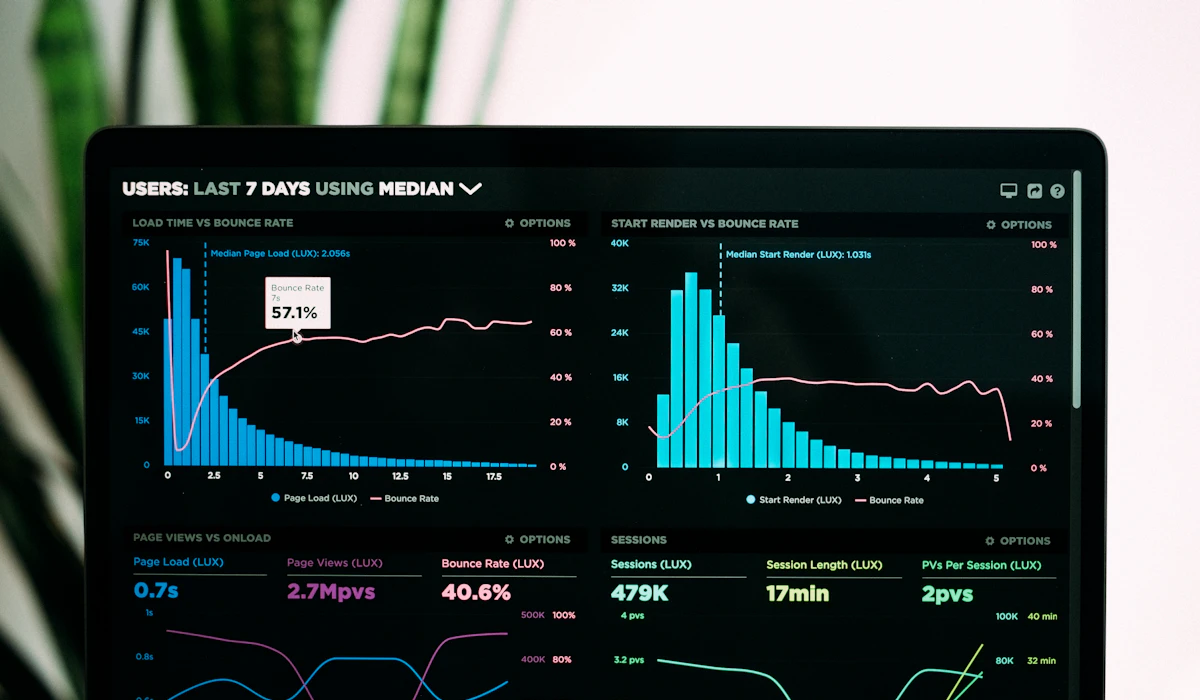
As AI-run campaigns make it harder to see which channel drove a sale, marketing mix modelling (MMM) is back. Google’s open-source Meridian and Meta’s Robyn let you estimate what each channel adds, without relying on the ad platform’s own reporting.
What to do: Use AI to summarize reports and spot trends. Use a mix model or holdout tests to decide budgets. Never let the platform that spends your money be the only judge of whether it worked.
6. Customer service: hybrid beats full automation
Klarna is the best-known example. In 2024 it said its AI assistant handled two-thirds of customer chats. By May 2025, its CEO admitted cost had been “too dominant” a factor and quality had suffered, and promised customers could always reach a human. The assistant still handles two-thirds of inquiries, with responses 82% faster (CX Dive).
What to do: Let a chatbot answer routine questions such as order status, pricing and hours. Always show a clear way to reach a person.
7. Creative: faster production, same need for craft
AI image and video tools cut production time dramatically. Coca-Cola’s 2025 holiday ads were made with AI tools that generated more than 70,000 video clips, refined by people, in about a month. They were still mocked online for visual glitches such as trucks changing shape (TechRadar).
What to do: Use AI for concepts, variations and resizing. Have a person check every frame before launch, and label realistic AI images where platforms require it.
8. Research, planning and admin: the easiest win
The fastest gains often come from the least glamorous work: summarizing calls, drafting reports, cleaning spreadsheets, writing briefs and preparing competitor research. HubSpot found 35.6% of marketers already use AI extensively for administrative automation. Junior staff gain the most: in a study of 5,179 support agents, AI raised productivity by 14% on average and 34% for newer staff.
What to do: List the ten tasks your team repeats every week. Pick the three that take longest and test AI on those first.
Pro tip: Save your best prompts as templates, with your brand voice, audience and examples built in. A shared prompt library turns one person’s AI skill into a team skill.
How to start using AI in your marketing: a 7-step plan

Most teams skip straight to tools. The data says the real gaps are training and governance. 55% of marketing teams have no AI usage policy, and 64% have no AI roadmap (MarTech). McKinsey found the small group of “AI high performers” are nearly three times as likely to redesign their workflows. Here is the order I recommend.
| Step | What to do | Time needed |
|---|---|---|
| 1. Set rules | Write a one-page AI policy: approved tools, what data never goes in, who reviews what | 1 week |
| 2. Train the team | Teach prompting, fact-checking and your brand voice | 2 weeks |
| 3. List use cases | Rank tasks by time saved and risk; start with low-risk ones | 1 week |
| 4. Run pilots | Test 2 or 3 use cases with a clear metric each | 4 to 6 weeks |
| 5. Redesign the workflow | Add named human review steps for accuracy, claims and disclosure | 2 weeks |
| 6. Check the rules | Review advertising, privacy and AI labelling rules for your markets | 1 week |
| 7. Scale what works | Give successful pilots an owner, a budget and a target | Ongoing |
The time estimates are my own guide for a small or mid-sized team, not a standard. Adjust them to your size.
The risks and rules of AI marketing in 2026
AI marketing now has real legal limits. These are the ones most likely to affect you.
| Area | Rule | What it means for you |
|---|---|---|
| Fake reviews (USA) | FTC rule, 2024 | AI-generated fake reviews and testimonials are banned |
| AI claims (USA) | FTC Operation AI Comply | Back up any “AI-powered” claim; there is no AI exemption |
| Labelling (EU) | EU AI Act Article 50, from 2 August 2026 | Label deepfakes and tell people when they are talking to a chatbot |
| Labelling (India) | IT Rules amendment, February 2026 | Platforms must label synthetic media |
| Copyright (USA) | Copyright Office report, January 2025 | Purely AI-generated work is not protected; prompts alone are not authorship |
| Platforms | Meta “AI info”, YouTube synthetic content disclosure, Google Ads AI labels | Disclose realistic AI images and video |
Trust matters as much as law. A Getty Images study found almost 90% of consumers want to know if an image was made with AI. And McKinsey reports that 51% of organizations using AI have already had at least one negative consequence, with inaccuracy the most common.
This is general information, not legal advice. Check the rules for your markets with a qualified adviser.
What I see with clients
The pattern I see most often is simple. Teams use AI to produce more, not better. They publish twice as many blog posts or ad variations, and results stay flat. The teams that see results use the saved hours differently: on original data, expert review, sharper offers and proper testing.
The second pattern is measurement. Businesses that let ad platforms both spend and judge their budgets often struggle to explain results. Those that add simple holdout tests make better decisions. If you are a startup or a small business, start small: one use case, one metric, one owner.
What’s changing with AI next
Two shifts are coming fast. First, AI agents: tools that complete multi-step tasks, not just answer prompts. Adoption is still early. McKinsey found 23% of organizations are scaling agents anywhere in the business, and no more than 10% in any single function. Second, AI search is changing how buyers discover brands. Salesforce found 88% of marketers have started optimizing for AI-generated answers. Your AI visibility is becoming a channel to manage, like rankings.
Mandeep’s take: The biggest mistake I see is treating AI as a content machine. If AI can write it in ten seconds, so can every competitor. Use AI to remove the busywork, then spend the time you save on the things AI cannot fake: your experience, your data and your opinion. That is what Google, AI assistants and customers all reward.
Conclusion
Using AI in marketing is no longer optional. Nearly nine in ten teams already do it. The advantage now comes from using it well: clear rules, trained people, human review, honest labelling and independent measurement.
Start with one task that wastes your team’s time this week, and test AI on it. If you want help building an AI-ready marketing plan, covering SEO, AI search and paid media, book a free strategy call. For the basics behind every plan, read my guide to the 4 Ps of marketing.
- Review of your Google and AI search visibility
- The pages to fix first, in priority order
- A clear 90 day plan, with no obligation
FAQs
How can I use AI in marketing?
Use AI for repetitive, time-consuming work: research, content drafts, ad bidding and targeting, email segmentation, predictions, reporting and routine customer questions. Keep people in charge of strategy, original insight, fact-checking and brand decisions. Start with one low-risk task, measure the result, then scale what works.
How do I use AI in digital marketing?
Apply AI channel by channel. Use it for keyword research and briefs in SEO, bidding and creative variations in paid ads, predictive segments in email, and summaries and forecasts in analytics. Add human review at each step, and test AI-run campaigns against a control group before scaling.
How do I use generative AI in marketing?
Use generative AI to create first drafts of blog posts, emails, ad copy, social posts, images and video concepts. Give it a clear brief with your audience, brand voice and proof points. Then edit the output, add your own experience and data, check every fact, and label realistic AI images where rules require it.
How do I use AI in content marketing without hurting SEO?
Google does not penalize content for being AI-assisted. It targets mass-produced pages that add no value. Use AI for research, outlines and drafts, then add original examples, data and expert opinion. Fact-check everything, including titles, meta descriptions and alt text, and publish fewer, better pages.
Will AI replace marketers?
The evidence points to AI changing marketing jobs rather than replacing them. HubSpot's 2026 survey found 73.4% of marketers see AI as working alongside them. Controlled studies show AI speeds up routine work but makes more mistakes on tasks outside its abilities, so human judgement remains essential.
What are the risks of using AI in marketing?
The main risks are inaccurate content, brand-damaging creative, privacy breaches and legal issues. The FTC bans AI-generated fake reviews, the EU AI Act requires labelling of deepfakes from August 2026, and purely AI-generated work cannot be copyrighted in the US. Clear policies and human review reduce these risks.
Which AI tools do marketers use most?
General-purpose assistants lead. The Marketing AI Institute's 2025 survey found employers most often provide ChatGPT Team or Enterprise (61%), followed by Microsoft Copilot (38%) and Gemini for Workspace (32%). Built-in AI in ad platforms, email tools and analytics is also widely used.